The Gulf Countries Can’t Take Much More
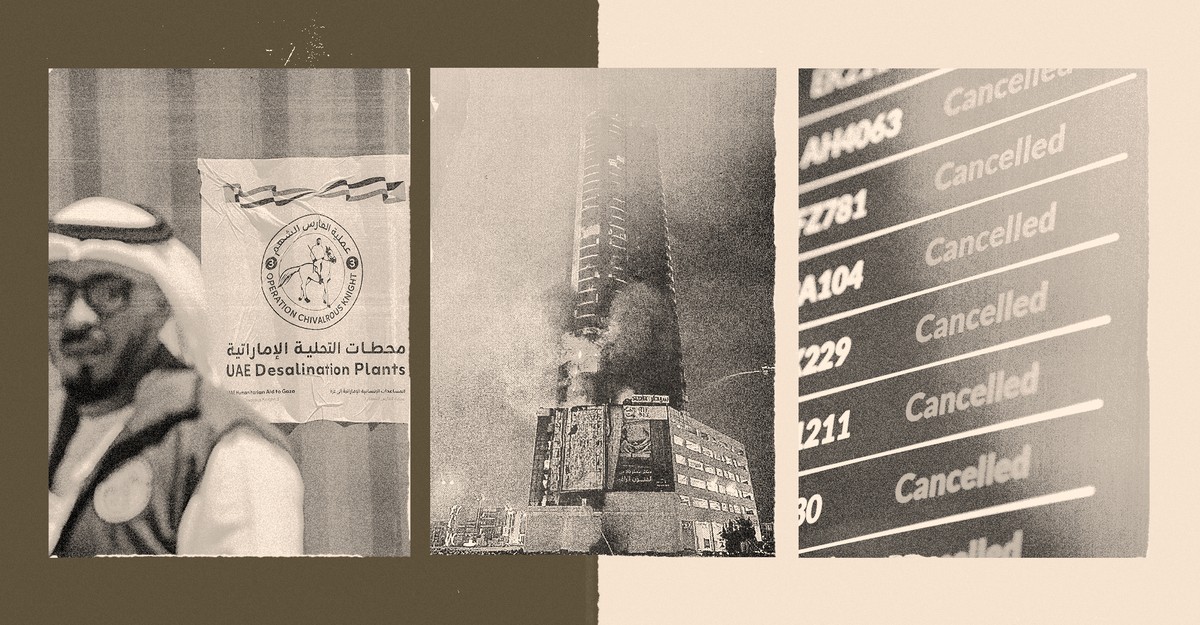
From the moment the first Iranian missiles appeared in the sky over the Persian Gulf this past weekend, the target countries’ effort to intercept them was accompanied by an equally vigorous effort to reassure residents, tourists, and investors that they had nothing to worry about. The president of the United Arab Emirates was filmed calmly strolling through a Dubai mall, and an army of online influencers downplayed the images of burning hotels and closed airports. “Given Europe’s crime rates, Dubai is statistically safer even with missiles flying,” Pavel Durov, the CEO of the messaging app Telegram, wrote on X. “Can’t wait to be back.”
TL;DR
- Gulf countries are attempting to reassure residents and investors amid Iranian missile attacks.
- The region's economy relies heavily on imported food and desalinated water, both vulnerable to air strikes.
- Prolonged conflict could lead to significant economic disruption, including potential halts in oil and gas production.
- Dubai's economy, highly dependent on tourism and investment, is particularly exposed to reputational risk.
- Foreign workers are fleeing the region, raising concerns about labor shortages.
- Iran's attacks may aim to pressure Gulf leaders to influence the US's war decisions.
- Potential Iranian strikes on water desalination plants represent an existential threat.
- The war's impact on the Gulf could have global economic repercussions due to dependence on Arabian oil.
- Gulf leaders have limited influence over the conflict's course and fear future instability even if the current regime falls.